The Short Answer
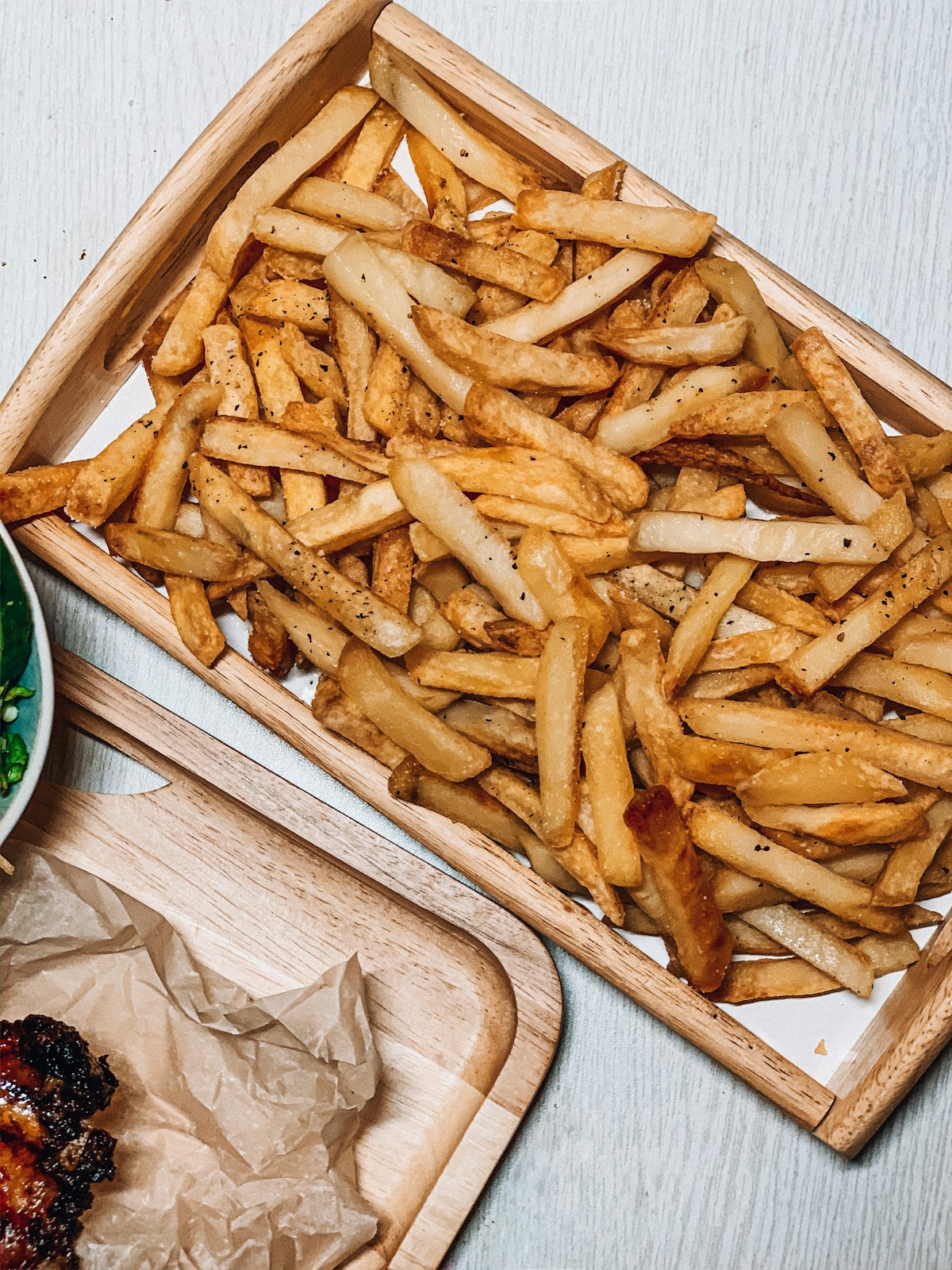
Most food trucks fry in canola oil or a generic vegetable blend. It's cheap, it's neutral, and it gets the job done. We don't do that. Bag Lady's Fry Joint uses beef tallow, the same animal fat that made McDonald's fries famous before they switched to vegetable oil in 1990. The difference in flavor is real, and if you've eaten our fries at a Nashville event, you already know it.
This isn't a marketing gimmick. It's a cooking decision that affects everything about how the fry tastes, how crispy it gets, and how long it holds after it comes out of the fryer. If you're booking food truck catering for a corporate event in The Gulch, a wedding out in Brentwood, or a backyard birthday in East Nashville, you want to understand what's going into the food you're serving your guests. So here's the full story.
What Beef Tallow Actually Is
Beef tallow is rendered beef fat. That's it. You take the hard fat that surrounds the kidneys and loins of a cow, you heat it slowly until it liquefies and the impurities separate out, and you're left with a clean, stable cooking fat that has been used for centuries. It's solid at room temperature, it has a mild, slightly beefy aroma, and it performs incredibly well at high frying temperatures.
Before industrial seed oils became cheap and plentiful in the mid-20th century, tallow was one of the most common cooking fats in American kitchens. It's what gave diner fries their character. It's what made old-school fast food taste different from what you get today. Then vegetable oil lobbying and industrial food production pushed it out, and most of a generation grew up not knowing what they were missing.
Nashville's BBQ and meat culture has always understood that fat is flavor. If you've ever been to a real whole-hog BBQ in town and wondered why it tastes so different from what you get at a chain, part of the answer is the fat rendering into the meat. Same principle applies here.
Beef tallow has a smoke point of around 400°F, which is well above ideal frying temperature. That stability means less oil breakdown, less off-flavor, and a cleaner-tasting fry every single time.
How It Compares to Other Frying Oils
Here's the honest breakdown. Not every oil is the same, and the differences show up directly in the fry you eat.
| Oil Type | Smoke Point | Fat Type | Flavor Impact | Stability at Fry Temp |
|---|---|---|---|---|
| Beef Tallow (what we use) | ~400°F | Mostly saturated | Rich, beefy, deep flavor | Very high |
| Canola Oil | ~400°F | Mostly unsaturated | Neutral to slightly bitter | Moderate |
| Vegetable Blend | ~400°F | Mostly unsaturated | Neutral, flat | Moderate |
| Peanut Oil | ~450°F | Mixed | Slightly nutty, clean | High |
| Lard (pork fat) | ~370°F | Mostly saturated | Rich, porky, distinctive | High |
The smoke point numbers are similar across the board, so why does tallow win on flavor? It comes down to fat composition and what happens at a molecular level when you fry with it. Saturated fats like tallow don't oxidize as quickly as unsaturated fats (canola, vegetable) at high temperatures. That means the oil stays cleaner, doesn't develop off-flavors as fast, and contributes actual flavor to the fry instead of just heat.
The flavor compounds in beef tallow also interact with the surface of the potato during frying. You get the Maillard reaction happening at the crust, plus trace savory notes from the fat itself. That combination produces something that is noticeably richer than a fry cooked in a neutral seed oil, even if you can't immediately put a name to what's different.
Why It Matters at a Nashville Event
When you're booking food truck catering for an event, you're not just feeding people. You're creating a memory. The food has to stand up to being talked about. People at a wedding in Franklin or a corporate lunch in Midtown should be asking "where did they get this food truck" not just "where's the food." Fries cooked in beef tallow are the kind of thing people come back for seconds on, and then ask about.
We've served CMA Fest crowds, Germantown neighborhood events, office parties on Charlotte Pike, and private backyard dinners in 12 South. Every single time, the fries are the thing people talk about. Not because we tell them we use beef tallow beforehand, but because the flavor earns it. Then when they find out, it just adds to the story.
The most common reaction we hear: "These taste like how fries used to taste." That's not nostalgia talking. That's the beef tallow doing its job.
A Word on Dietary Considerations
Beef tallow is animal fat, so it's not suitable for vegetarians, vegans, or certain religious dietary practices. That's a real consideration for events with mixed guest lists, and we're upfront about it. If you're planning a corporate event or wedding where you know a significant portion of your guests don't eat beef, it's worth a conversation with us about the full menu and how we can accommodate everybody.
What we won't do is quietly swap to a lesser oil and not tell anyone just to avoid the conversation. If you're booking us, you're booking the real thing, and you deserve to know exactly what goes into the food.
The Bottom Line
Beef tallow fries are better because the fat is more stable, more flavorful, and more honest than the generic oils used by most food trucks. Nashville already understands that cooking with real animal fats produces better results. That's why the best BBQ joints in town aren't using spray oil and that's why we're not either.
If you want fries that your guests will actually remember, you want fries cooked the right way. Lock in your date and let's talk about what we can bring to your event.