Why This Question Actually Matters
When you're booking a food truck for a Nashville event, you're probably thinking about headcount, timing, parking, and whether the truck can handle the volume. You're probably not asking whether the fries are hand cut or frozen. But you should be, because the answer tells you a lot about the quality of everything else that's coming out of that kitchen.
The fry is one of the most revealing items on a food truck menu. It's a simple food, and simple foods are where shortcuts show. A hand cut fry requires a whole potato, a real knife or cutter, and a process. A frozen fry requires opening a bag. There's a reason most food service operations go frozen, and it's not because frozen tastes better.
The Actual Process Difference
Let's be specific about what we mean by each.
Frozen Fries: What Actually Happens
A frozen fry starts at a processing plant. Potatoes are peeled, cut, blanched in hot water to pre-cook the interior, parfried (partially fried once), and then flash-frozen. During this process, most commercial frozen fries get coated in a starch slurry or batter that helps them hold texture after the second fry. They also typically contain dextrose for color, sodium acid pyrophosphate to prevent graying, and various other additives depending on the brand.
By the time a frozen fry hits your plate at an event, it has been through four or five processing steps, frozen and thawed, and coated in substances designed to mimic what a fresh fry does naturally. The coating is what you're tasting when you eat a "crispy" frozen fry. It's an engineered texture, not a natural one.
Hand Cut Fries: What We Actually Do
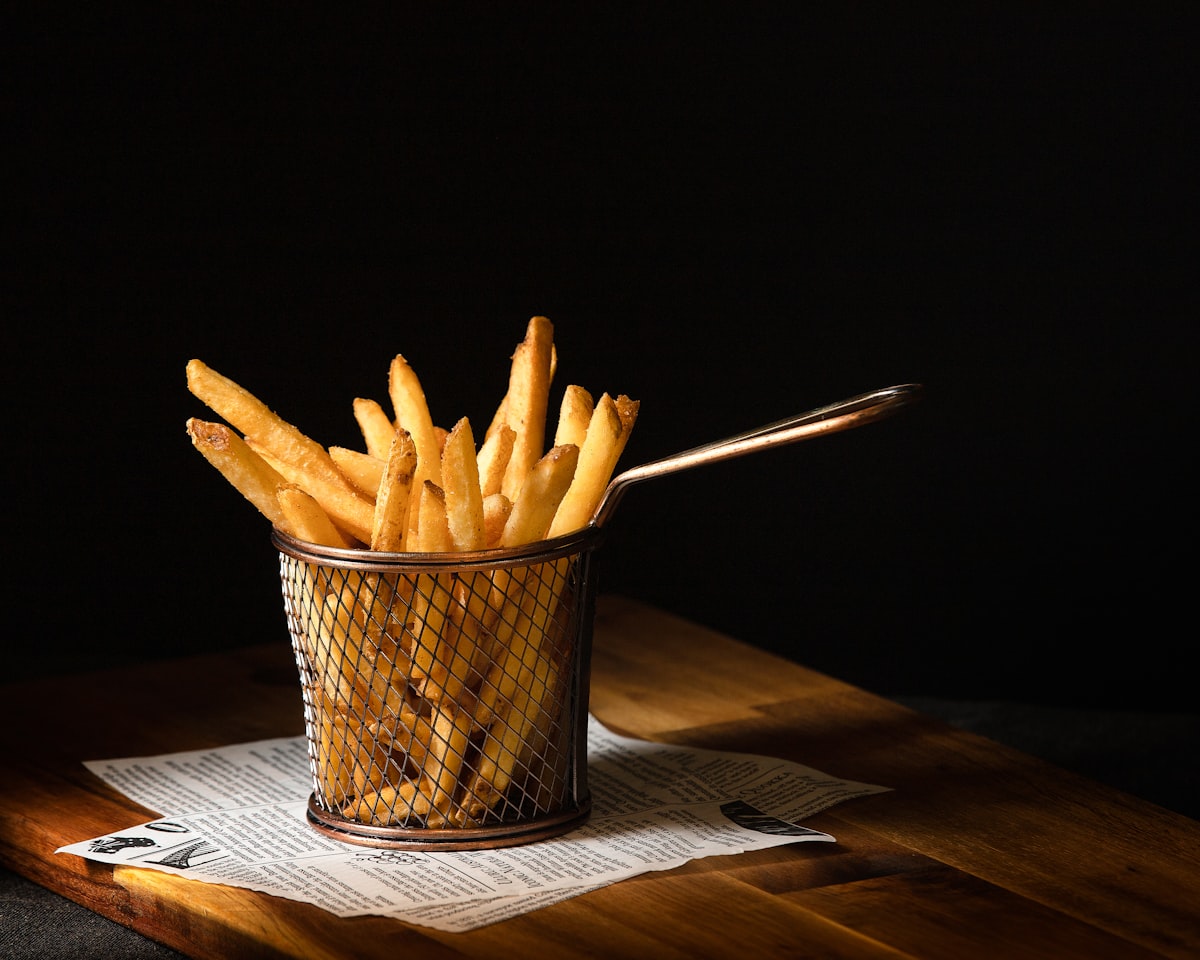
We start with whole russet potatoes. They're cut fresh, soaked in cold water to remove excess surface starch, dried, and then fried twice: once at a lower temperature to cook the interior all the way through, and a second time at high heat to build the crust. That's the entire process. One ingredient, two fries, done.
The crust you get on a hand cut fry is the result of the potato's own starches gelatinizing and then drying out at the surface during that second fry. It's structural. It's part of the potato. That matters a lot when you get to catering service conditions.
Bag Lady's hand cut fries: potato. That's the list. No coating, no preservatives, no additives. If you flip a bag of name-brand frozen fries and read the ingredient panel, you'll find eight to twelve items minimum.
Texture and Flavor: What You're Actually Tasting
The flavor difference is real but subtle to some people, especially if you've grown up eating mostly frozen fries. The bigger difference is texture, and that's where hand cut fries separate themselves clearly.
A well-made hand cut fry has a crust that's firm and slightly chewy, almost like a thin shell, with a fluffy interior that still has some moisture. The flavor is clean potato with whatever seasoning you've added, plus the flavor contribution from the cooking fat. There's a depth to it that comes from the actual potato.
A frozen fry has a thinner, crispier exterior (that's the engineered coating) but the interior tends toward dense and slightly waxy. The flavor is more neutral because the parfryer process and the additives moderate the natural potato flavor. It's not bad, but it's flat compared to the real thing.
Why Frozen Fries Fail in Catering Service
This is the part that matters most for Nashville event planning. Frozen fries are designed to be served immediately out of a fryer in a fast-food setting where the fry goes from oil to customer in under a minute. They are not designed for catering service conditions.
Here's what happens to a frozen fry at a catered event. The engineered coating, which is mostly starch and water, starts absorbing steam as soon as the fry is out of the oil. Within three to five minutes, that coating has turned soft and slightly gummy. The fry loses its crunch. The interior, which was already parcooked and processed, has nothing structural to fall back on. What you end up serving to guests is a soft, limp fry that tastes like the ghost of something that was once crispy.
Hand cut fries behave differently. The natural crust is thicker and denser. It takes longer to steam-soften because it's not a coating that sits on top of the surface, it's an actual structural layer of the potato itself. Combined with cooking in beef tallow (which produces an even denser, more waterproof crust than seed oils), our fries hold up through a realistic catering service window significantly better than frozen.
At a 150-person corporate event in Midtown Nashville, guests don't all arrive at the same time. Your fries need to hold from the first guest in line to the last. That's a 20 to 40 minute window. Hand cut fries in beef tallow can do that. Frozen fries cannot.
Side by Side: Hand Cut vs. Frozen at Events
| Factor | Hand Cut (Bag Lady's) | Frozen (Most Trucks) |
|---|---|---|
| Ingredients | Potato only | 8-12+ ingredients |
| Crust Type | Natural (potato starch) | Engineered coating |
| Flavor | Real potato, complex | Neutral, processed |
| Hold Time After Frying | 15-25 minutes before softening | 3-7 minutes before softening |
| Interior Texture | Fluffy, moist | Dense, waxy |
| Prep Labor | High (worth it) | Low (shows) |
3 Questions to Ask Any Nashville Food Truck About Their Fries
Before you book a food truck for your next event in Nashville, whether that's a wedding out in Franklin, a company lunch near Vanderbilt, or a birthday party in Sylvan Park, ask these three questions about the fries specifically.
- Are your fries hand cut or frozen? If they can't answer without hesitation, that's your answer.
- What oil do you fry in? The oil type tells you how seriously they take the fry. Beef tallow or quality peanut oil means they care. Generic vegetable blend usually means cost-cutting across the board.
- How do you manage fry timing during a long service? A good answer involves batching, holding temps, and service flow. A bad answer is a blank look.
Hand cut russet potatoes. Beef tallow. We batch-fry throughout service and manage timing so the last guest gets the same quality as the first. That's the standard we hold ourselves to every single event.
Bottom Line for Event Planners
The difference between hand cut and frozen fries shows up most clearly at events. If you're feeding 80 people at a backyard party in East Nashville or 300 guests at a corporate event at a venue in The Gulch, the quality of the fry is going to be visible in people's plates and audible in what they say to each other in line. Hand cut wins that conversation every time. Frozen doesn't even come close in a catering setting.
We've never served a frozen fry, and we're not going to start. It's not that complicated. Just use real food.